Hygiene products
Good reasons to think about the certification of your products
The number of people with skin problems is constantly rising. In Switzerland, about 20% of the population suffer from a contact allergy, also called contact dermatitis. The skin becomes inflamed when it comes into contact with substances that it can't tolerate.
The most common triggers include fragrances, which are unfortunately also found in many hygiene products. Hygiene products thus have a high risk of triggering allergic reactions, as they are often in prolonged contact with the skin and mucous membranes. Typical symptoms of a contact allergy include: itching, reddening skin, dry and scaly skin, nodules and blisters, and painful cracks in the skin that heal poorly. And this means a severely reduced quality of life for those affected.
Those with highly sensitive and allergy-prone skin rely on hygiene products without allergy triggers such as perfume and dyes, and count on products that consider their special requirements and improve their quality of life.
The requirements for obtaining the Allergy Seal of Quality
In order for hygiene articles to be certified, they may contain the 81 potentially allergenic compounds, azo and disperse dyes, formaldehyde, nickel and chromium (VI) only in very limited quantities. In addition to the above-mentioned basic requirements, the claims "without perfume / without fragrances", "without dyes" and "without latex" are tested if these claims are advertised or used on the packaging.
Are you interested? Order the requirements or request a non-binding quote.
Frequently asked questions
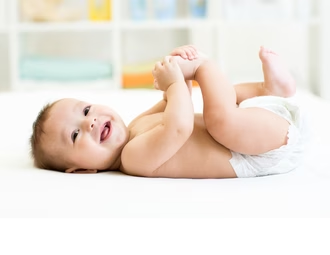
Hygiene and toiletries include, for example, nappies for babies and toddlers, sanitary towels and pads, and lotion-free cleaning wipes.
To be certified, hygiene products may only contain very limited quantities of 81 potentially allergenic substances, azo and disperse dyes, formaldehyde, nickel and chromium (VI). In addition to the basic requirements above, the claims "without perfume/without fragrances", "without colourants" and "without latex" are tested if they are advertised or used on packaging.
A company that manufactures hygiene products with the Allergy Seal of Quality must, for certification, demonstrate and have implemented an allergen management system in accordance with the specifications of an HACCP concept.
Any further questions? Please send them to: